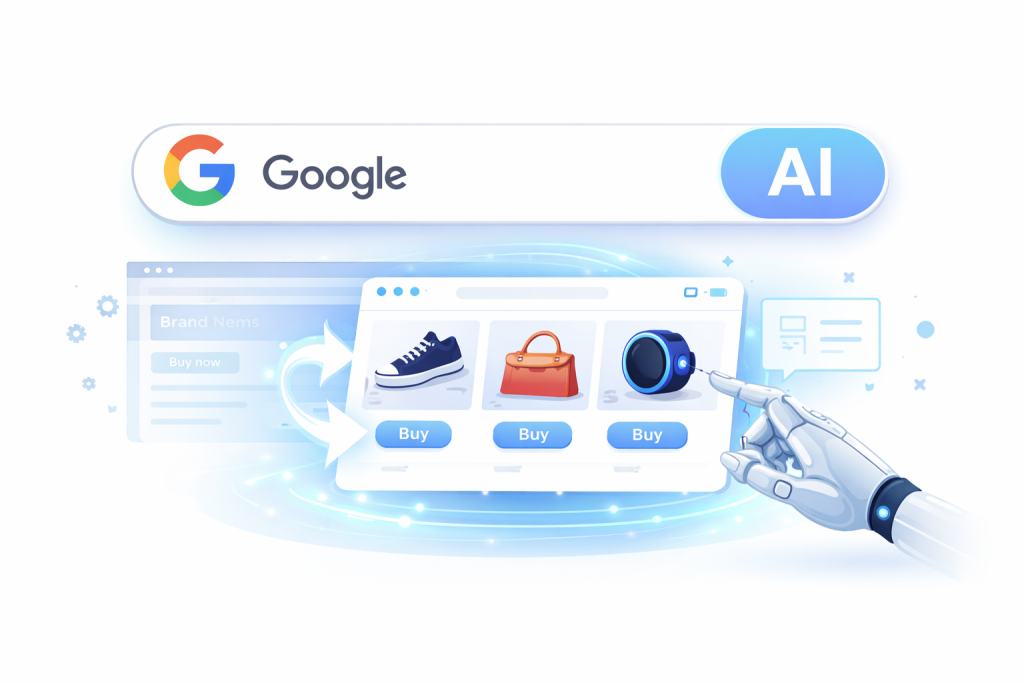

Google has been granted a patent describing a system that could automatically generate brand pages with artificial intelligence directly inside search results — potentially replacing links to companies’ own websites.
The patent, US12536233B1, outlines a mechanism where the search engine evaluates the quality and effectiveness of landing pages that appear in search results. If a page is considered weak — for example due to poor conversion rates, high bounce rates, or suboptimal user experience — the system could generate an AI-built alternative page for that brand.
As Tovar.Media analysed, according to the patent description, these AI-generated pages could include key e-commerce elements such as product listings, filters, recommendations, and purchase buttons. In some cases, the interface could also feature conversational assistants to help users refine product choices.
The content shown on these pages could be personalized based on user behavior, search history, and other contextual signals.
If implemented, the system would allow users to browse products and interact with brands directly within the search interface, potentially reducing the need to visit external websites.
For the e-commerce industry, such a model could significantly reshape traffic flows. Online retailers and brands rely heavily on organic search traffic to drive customers to their own storefronts, where they control branding, merchandising, and customer data.
At the same time, the technology could raise the bar for website quality. Landing pages with poor design, slow load times, or low engagement metrics might be bypassed in favor of AI-generated alternatives optimized for conversions.
The patent does not indicate that the feature is currently being deployed, and companies frequently file patents for technologies that never reach production. However, it highlights a possible direction for the future of search — one where AI increasingly acts as the interface between consumers and online stores.
For merchants and e-commerce platforms, the shift could mean adapting to a new environment where discovery, product presentation, and even parts of the shopping journey take place inside AI-powered search experiences rather than on traditional websites.
Editorial Team, Dropshipping.Media